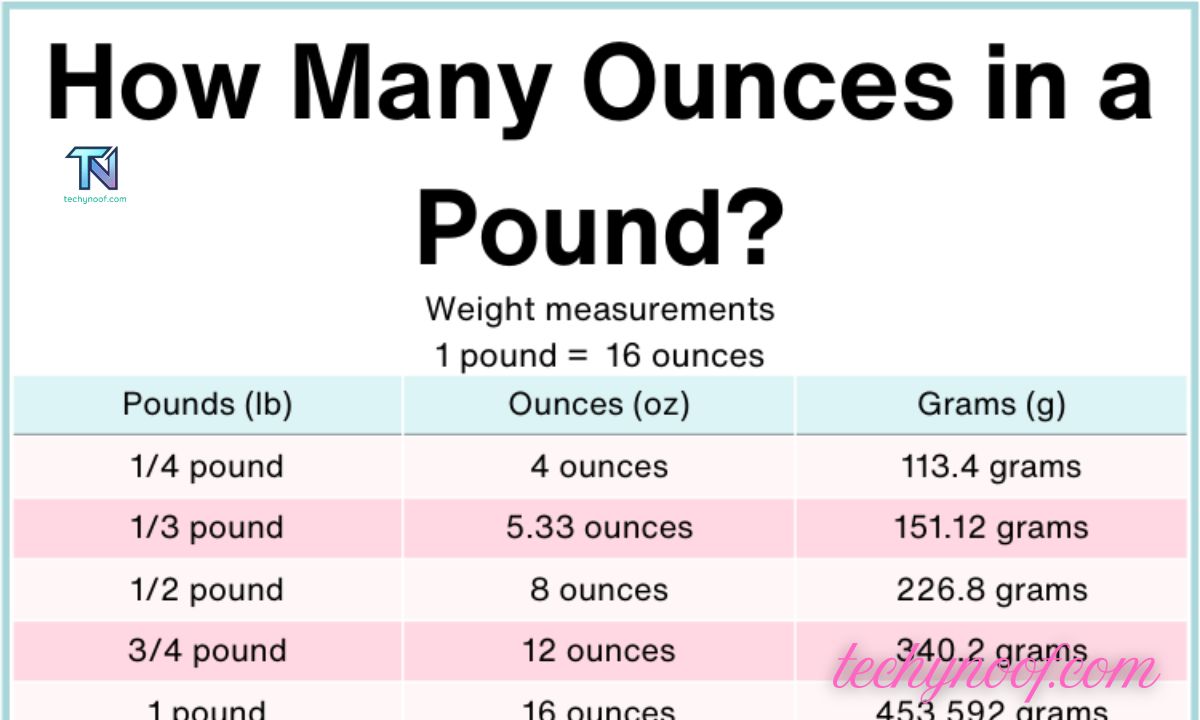
Understanding weight conversions is essential for everyday tasks. One of the most common questions is how many ounces are in a pound. The answer is simple: one pound equals 16 ounces in the standard measurement system.
This conversion applies to cooking, shipping, fitness tracking, and many daily activities. Knowing this helps you measure ingredients accurately and calculate weights correctly. Let’s explore this basic but important conversion in detail.
The Clear Answer: Ounces in a Pound
In the U.S. customary system, 1 pound equals 16 ounces. This is the standard measurement you’ll use for everyday items like food, packages, and body weight. However, there’s also a troy pound used specifically for precious metals, where 1 troy pound equals 12 troy ounces.
The avoirdupois system (16 ounces) is what most people use in daily life. Understanding this basic conversion is crucial for accurate measurements in cooking, shipping, and weight tracking.
| Measurement System | Ounces per Pound | Common Use |
| Avoirdupois | 16 ounces | Everyday items, food, packages |
| Troy | 12 troy ounces | Precious metals (gold, silver) |
- Standard conversion: 1 pound = 16 ounces
- Troy system: 1 pound = 12 troy ounces
- Avoirdupois is the most common system
- Troy ounces are slightly heavier than regular ounces
Breaking Down the Conversion
The avoirdupois system is the standard for most weight measurements. In this system, 1 pound contains exactly 16 ounces. This fits into a broader hierarchy where 1 ton equals 2,000 pounds, and 1 ounce equals 437.5 grains.
For example, if you buy 2 pounds of ground beef, that’s 32 ounces (2 × 16). The troy system works differently, with 1 troy pound equaling 12 troy ounces. Troy ounces are heavier than avoirdupois ounces, making the overall troy pound lighter.
| Conversion Type | Formula | Example |
| Pounds to Ounces (Avoirdupois) | Multiply by 16 | 3 lbs = 48 oz |
| Pounds to Ounces (Troy) | Multiply by 12 | 1 lb = 12 troy oz |
| Ounces to Pounds (Avoirdupois) | Divide by 16 | 64 oz = 4 lbs |
- Avoirdupois: multiply pounds by 16 to get ounces
- Troy: multiply pounds by 12 to get troy ounces
- Troy ounces are approximately 1.097 regular ounces
- Different systems serve different purposes
Why This Matters
Mixing up measurement systems or conversions can lead to serious mistakes in various situations. In cooking and baking, using 12 ounces instead of 16 for a pound of flour can completely ruin your recipe’s proportions.
When shipping packages, misjudging weight could result in higher postage costs or delivery issues. For precious metals transactions, confusing avoirdupois and troy measurements could mean overpaying significantly.
A baker scaling a recipe for 3 pounds of sugar needs 48 ounces, not 36, to maintain the correct sweetness level. Accurate conversions ensure success in cooking, commerce, and everyday tasks.
| Scenario | Wrong Conversion | Correct Conversion | Impact |
| Baking flour | 12 oz per lb | 16 oz per lb | Recipe failure |
| Shipping package | Incorrect weight | Accurate weight | Cost errors |
| Buying gold | 16 oz per lb | 12 troy oz per lb | Overpayment |
- Incorrect conversions ruin recipes
- Shipping costs depend on accurate weight
- Precious metal pricing requires troy system knowledge
- Small errors create big problems
Practical Applications
This conversion appears constantly in daily life across multiple contexts. When following recipes, knowing that 1 pound of chicken equals 16 ounces helps you portion ingredients accurately.
Fitness enthusiasts tracking body weight can understand that gaining 1 pound means adding 16 ounces to the scale. When shopping for bulk goods, a 4-pound bag of rice equals 64 ounces, helping you calculate servings.
For shipping, a 10-pound box weighs 160 ounces, which is useful for estimating postage costs on weight-based rates. These real-world applications make the conversion an essential skill.
| Application | Example | Conversion |
| Cooking | 1 lb chicken | 16 ounces |
| Fitness | Weight gain | 1 lb = 16 oz |
| Shopping | 4 lb rice bag | 64 ounces |
| Shipping | 10 lb package | 160 ounces |
- Recipes require accurate ingredient measurements
- Body weight tracking uses pound-to-ounce conversion
- Bulk shopping benefits from knowing total ounces
- Shipping costs calculate based on weight
Conversion Quick Reference
Having a quick reference guide makes conversions faster and more reliable. The avoirdupois system uses 16 ounces per pound for everyday items like food, packages, and general measurements.
The troy system uses 12 troy ounces per pound specifically for precious metals such as gold and silver. To convert pounds to ounces, multiply the number of pounds by 16 (or 12 for troy). To convert ounces to pounds, divide the number of ounces by 16 (or 12 for troy).
For instance, 2 pounds equals 32 ounces in the avoirdupois system, while 48 ounces equals 3 pounds.
| System | 1 Pound Equals | Primary Use |
| Avoirdupois | 16 ounces | Food, packages, everyday items |
| Troy | 12 troy ounces | Gold, silver, precious metals |
| Conversion Direction | Formula | Example |
| Pounds → Ounces (Avoirdupois) | Multiply by 16 | 5 lbs = 80 oz |
| Ounces → Pounds (Avoirdupois) | Divide by 16 | 32 oz = 2 lbs |
- Avoirdupois: standard 16-ounce conversion
- Troy: specialized 12-ounce conversion
- Multiply pounds by 16 for ounces
- Divide ounces by 16 for pounds
Common Questions Answered

People often have specific questions about ounce and pound conversions. How many 8-ounce portions are in a pound? In the avoirdupois system, 16 ÷ 8 equals 2 portions per pound. Are fluid ounces the same as weight ounces?
No—fluid ounces measure volume (like 8 fluid ounces equaling 1 cup), while weight ounces measure mass. A pound of water weighs 16 ounces but occupies about 1.92 cups due to density differences.
Why do we have troy versus avoirdupois systems? Troy ounces, rooted in medieval trade practices, prioritize precision for valuable metals, while avoirdupois is designed for general everyday use.
| Question | Answer | Details |
| 8-oz portions per pound? | 2 portions | 16 ÷ 8 = 2 |
| Fluid oz = weight oz? | No | Different measurements |
| Why two systems? | Historical reasons | Troy for metals, avoirdupois for general use |
- Two 8-ounce portions equal one pound
- Fluid ounces measure volume, not weight
- Weight ounces measure mass
- Troy and avoirdupois serve different purposes
Practical Tips for Mastering the Conversion
Mastering this conversion requires simple strategies and consistent practice. First, memorize that 1 pound equals 16 ounces for everyday use—this is your golden rule. Use a kitchen scale to measure ingredients in ounces or pounds for cooking precision.
When handling precious metals, always label measurements as “troy” to avoid confusion with avoirdupois ounces. Leverage conversion tools like Unit Converter apps or quick Google searches to confirm your calculations.
Visualize the conversion by picturing a 16-ounce soda bottle, which represents roughly 1 pound of liquid weight. These practical tricks help keep your measurements accurate whether you’re cooking, shipping, or working with metals.
| Tip | Method | Benefit |
| Memorize basics | Remember “16 ounces = 1 pound” | Quick mental calculations |
| Use kitchen scale | Measure in oz or lbs | Precision in cooking |
| Label systems | Mark “troy” vs standard | Avoid confusion |
| Use conversion apps | Digital calculators | Verify accuracy |
- Memorize the 16-ounce rule
- Invest in a reliable kitchen scale
- Clearly label troy measurements
- Use technology to double-check calculations
- Visualize with familiar objects
Things to Avoid
Several common mistakes can compromise your measurement accuracy. Don’t confuse fluid ounces with weight ounces—8 fluid ounces of water isn’t exactly 8 weight ounces due to density (it’s about 8.3 ounces).
Avoid assuming troy measurements for everyday items; always use 16 ounces per pound unless you’re specifically dealing with precious metals like gold or silver. Don’t eyeball weights for precise tasks such as baking or shipping—always use a scale for accuracy.
| Mistake | Problem | Solution |
| Confusing fluid & weight oz | Inaccurate measurements | Understand the difference |
| Assuming troy for everyday use | Wrong conversion (12 vs 16) | Use 16 oz for standard items |
| Eyeballing weights | Imprecise results | Always use a scale |
| Using unreliable sources | Misinformation | Verify with trusted resources |
- Fluid ounces ≠ weight ounces
- Troy system is for precious metals only
- Always use a scale for precision
- Verify information from reliable sources
Tailoring to Your Needs
Different situations require customized approaches to the ounce-pound conversion. For home cooks and bakers, stick to the standard 16 ounces per pound for all recipes to ensure proper ingredient ratios.
If you work in the jewelry or precious metals trade, memorize the troy system where 1 pound equals 12 troy ounces for accurate pricing and transactions. Fitness enthusiasts can use the conversion to track weight changes precisely.
| User Type | System to Use | Key Focus |
| Cooks/Bakers | Avoirdupois (16 oz) | Recipe accuracy |
| Jewelers | Troy (12 oz) | Precious metal pricing |
| Fitness Enthusiasts | Avoirdupois (16 oz) | Weight tracking |
| Shippers | Avoirdupois (16 oz) | Package weight accuracy |
- Cooks: always use 16 ounces per pound
- Jewelers: master the troy system
- Fitness: track in 0.5-pound increments (8 oz)
- Shippers: use postal scales for accuracy
- Customize based on your specific needs
Frequently Asked Questions
How many ounces are in a pound?
There are 16 ounces in a standard pound (avoirdupois system) used for everyday items.
Are fluid ounces the same as weight ounces?
No, fluid ounces measure volume while weight ounces measure mass.
What is a troy pound?
A troy pound equals 12 troy ounces and is used exclusively for precious metals like gold and silver.
How do I convert pounds to ounces?
Multiply the number of pounds by 16 to get ounces in the standard system.
How many 8-ounce portions are in one pound?
There are 2 portions of 8 ounces in one pound (16 ÷ 8 = 2).
Conclusion
Understanding that one pound equals 16 ounces is essential for cooking, shipping, fitness tracking, and everyday measurements. This simple conversion helps you measure accurately and avoid costly mistakes in various situations.
Remember to use the standard avoirdupois system (16 ounces) for daily tasks and the troy system (12 ounces) only for precious metals. By memorizing this basic formula and using proper measurement tools, you can handle weight conversions with complete confidence in any context.

David is the founder of techynoof.com, a site dedicated to puns and clever wordplay. He loves turning language into laughter and making words wonderfully witty.